Do Landscape Lights Actually Deter Burglars? (FBI Data + DFW Reality Check)
Most DFW homeowners assume the best deterrent is the brightest light: a 5000K motion-activated floodlight bolted to the eave, blasting on when something walks past. The data — and our installs across 19 DFW HOA neighborhoods — say the opposite. Here's what actually works.
FBI Uniform Crime Reports and crime-prevention research consistently show that always-on exterior lighting meaningfully reduces attempted residential break-ins compared with homes that rely on motion-activated floodlights alone. The gap is widely attributed to two factors: motion lights are reactive (the intruder is already at the wall), and they trigger so often from cats and wind that homeowners eventually disable them.
The deeper issue is what burglars actually look for during pre-attempt surveillance. Multiple DOJ-funded interview studies of convicted residential burglars converge on the same answer: dark hiding spots near entry points. Side-yard fence gates, recessed front doors, dark planter beds beside windows, and unlit patios behind the back fence. A single floodlight on the front of the house does nothing about any of those.
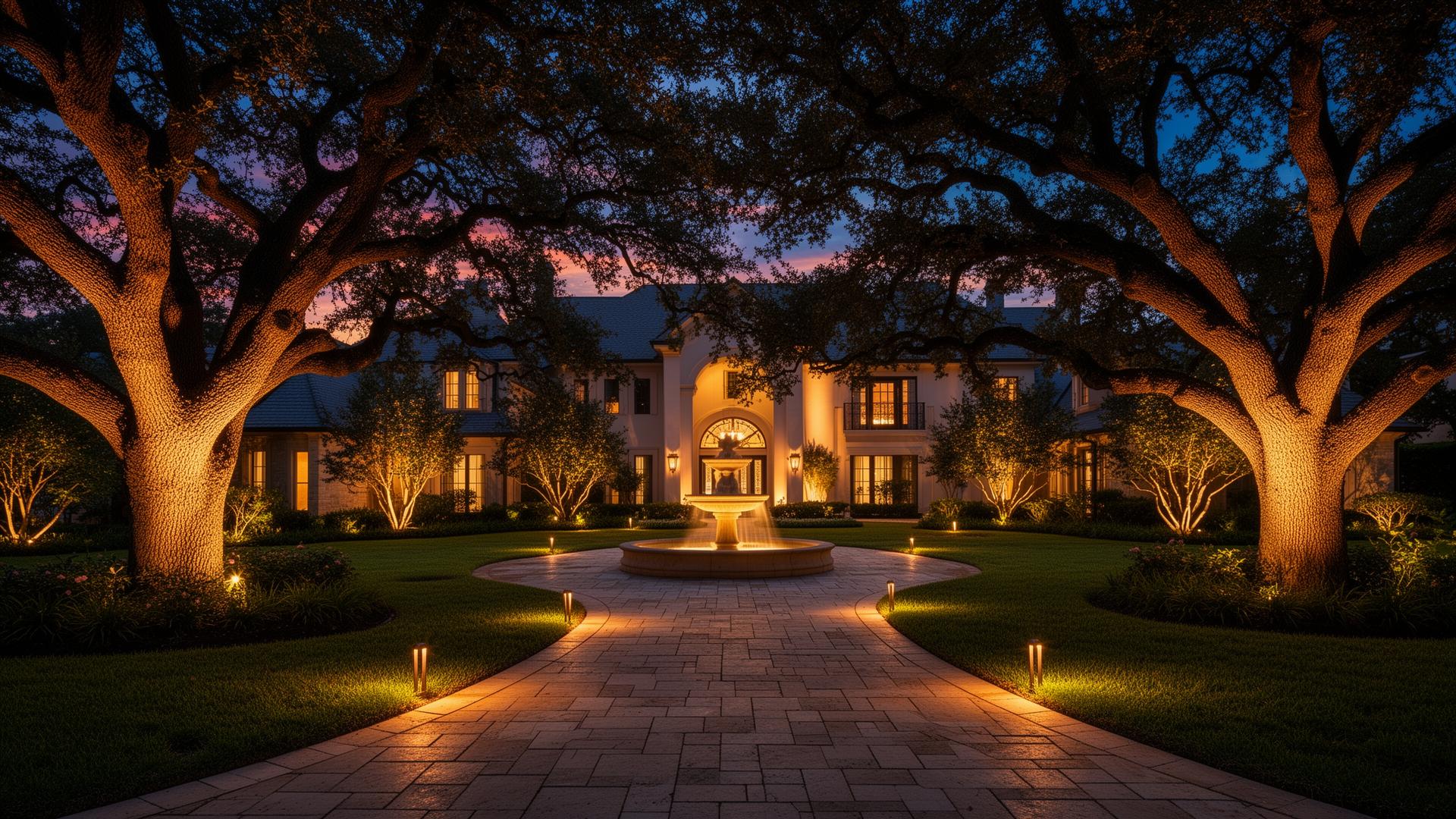
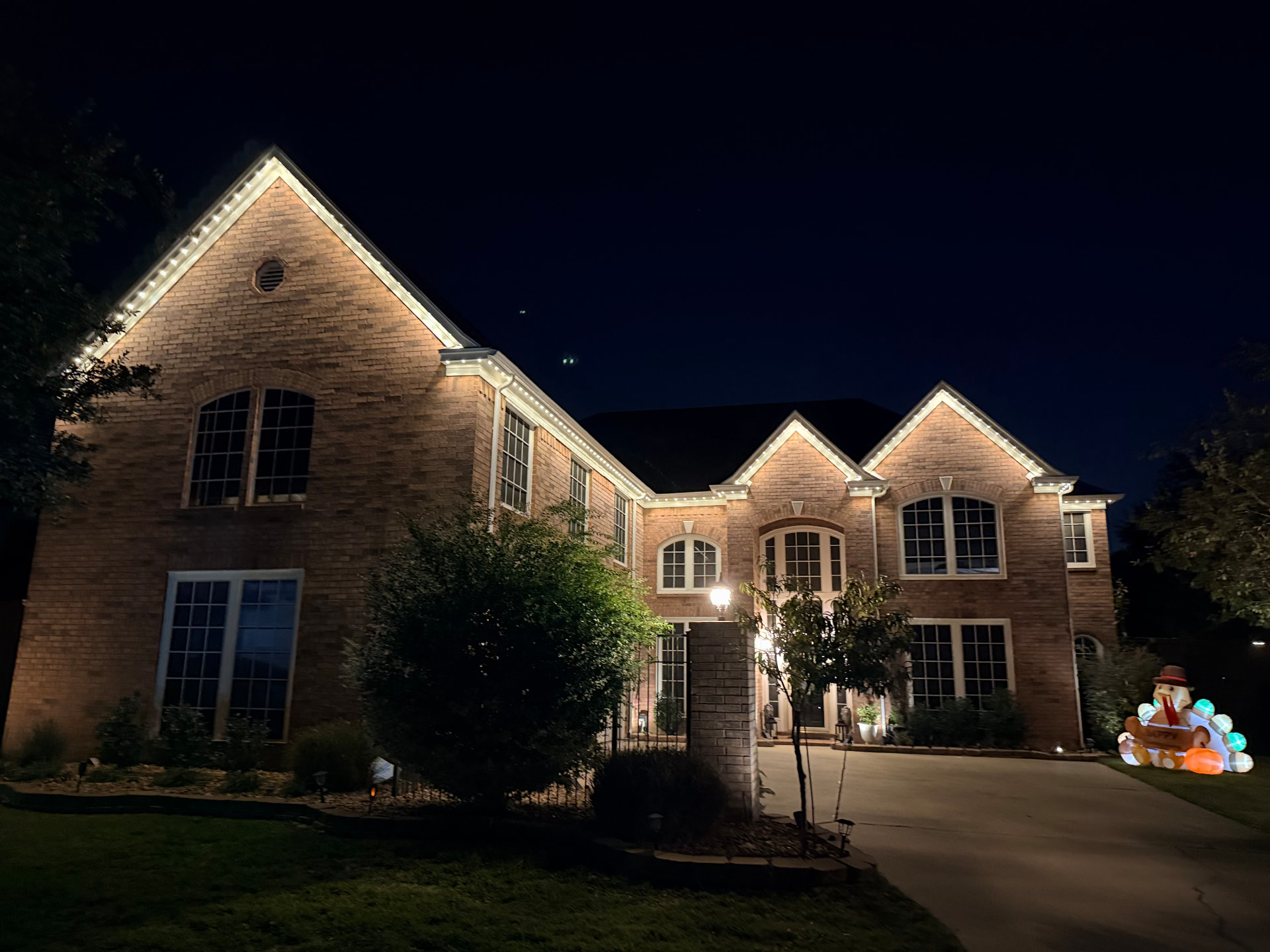
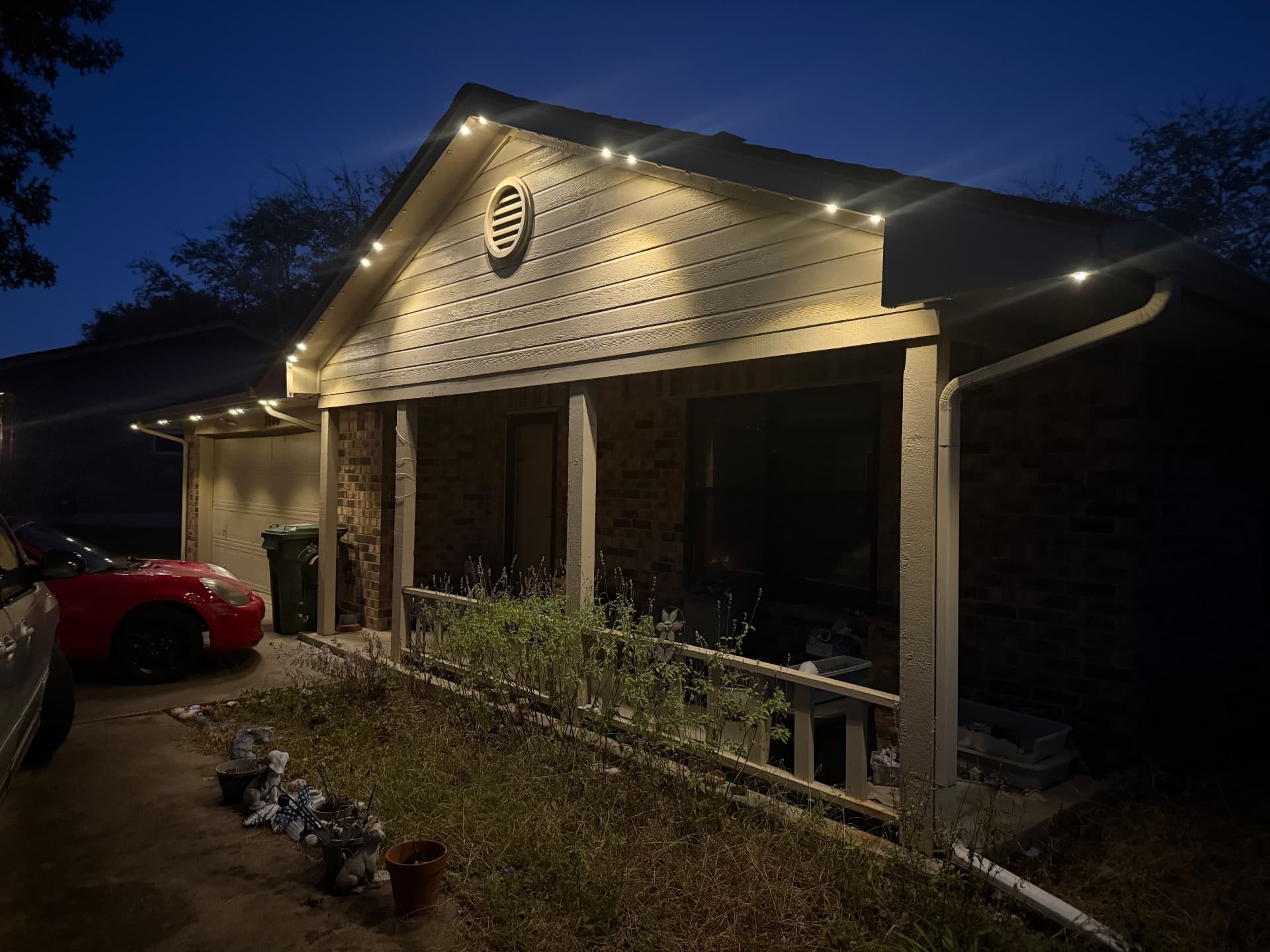
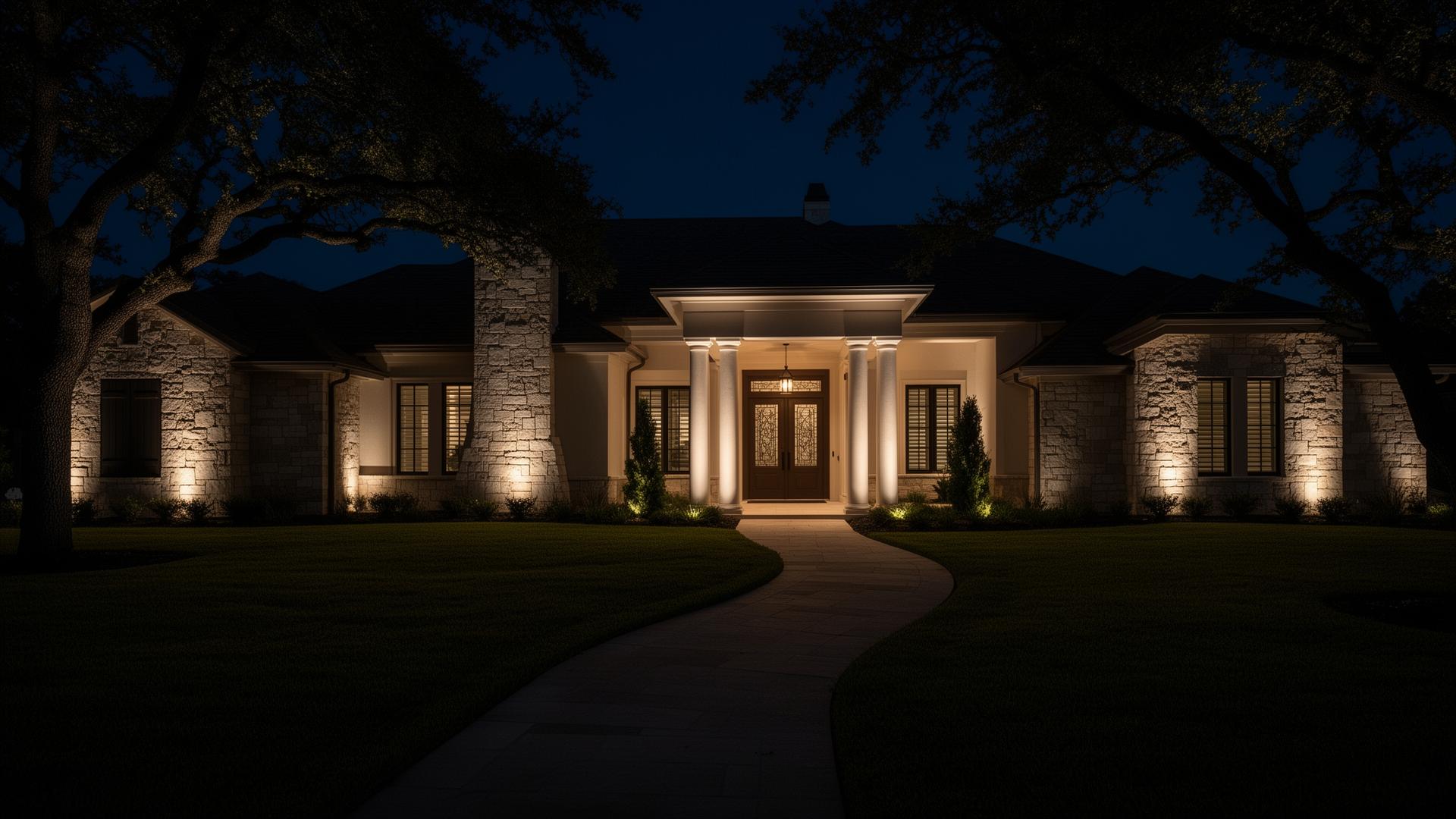
Architectural security lighting flips the model. Instead of one bright reactive light, you install a calm always-on layer that eliminates dark hiding spots completely. Façade uplights wash the front of the house with warm 2700K LED light. Path lights remove walkway shadows. Tucked well-lights eliminate the dark gaps beside front-door columns, garage corners, and side-yard gates. The intruder has no shadow to stand in, and the homeowner gets resort-grade curb appeal as a side effect.
What we install on a typical DFW perimeter: 6–10 façade uplights at $180–$240 each installed, 4–8 path lights at $140–$180 each, 2–4 dark-corner well lights at $160–$200 each, and a smart 300W transformer with dusk-to-dawn scheduling. Most full perimeter packages run $2,400–$7,800 turn-key. Estates with multiple structures (casita, pool house, detached garage) run $8,000–$18,000.
Smart-home integration is the modern upgrade we recommend most. The base system runs always-on at 30% brightness for ambient deterrence and curb appeal. Optional motion zones for back gates and side yards bump those areas to 100% when triggered, with the activation logged in the Ring/Nest/Apple Home app. You get the deterrent value of a floodlight without the visual ugliness, and the camera footage is far more usable because the perimeter is already lit.
Two things to skip even though they sound smart: (1) red-light-only systems sold as 'tactical security lighting' — they look like crime scenes and tank curb appeal; (2) consumer-grade solar path lights — they hold ~12% of their brightness after 18 months of DFW UV and create false security.
Want a security lighting design for your DFW property? Free in-home walkthrough plus a fixed-price quote. Call or text (817) 217-6382.