RGBW vs RGB Permanent Holiday Lights: Why the W Matters Year-Round
Cross-shop permanent holiday lighting in DFW and you'll see two acronyms thrown around: RGB and RGBW. Most homeowners assume they're equivalent. They're not — and the difference matters every single night of the year, not just during Christmas.
RGB systems use three LED channels (red, green, blue) and create 'white' by mixing all three at full power. The result is always slightly off — typically a cool pinkish or bluish white that looks fine in marketing photos but looks distinctly like 'Christmas lights left up year-round' in person. The wattage draw on white is also high (all three channels at 100%), which shortens bulb life over a multi-year warranty.
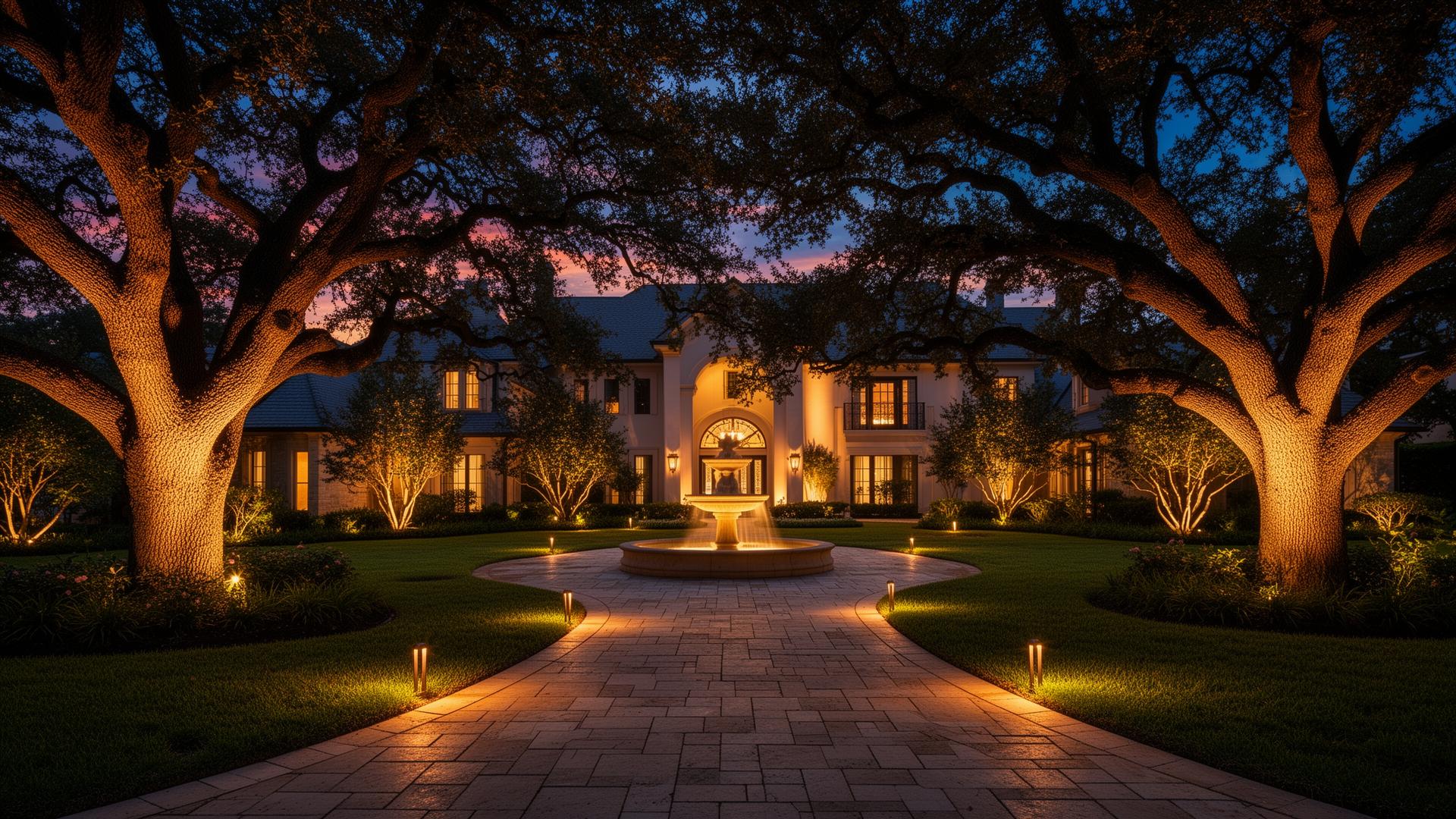
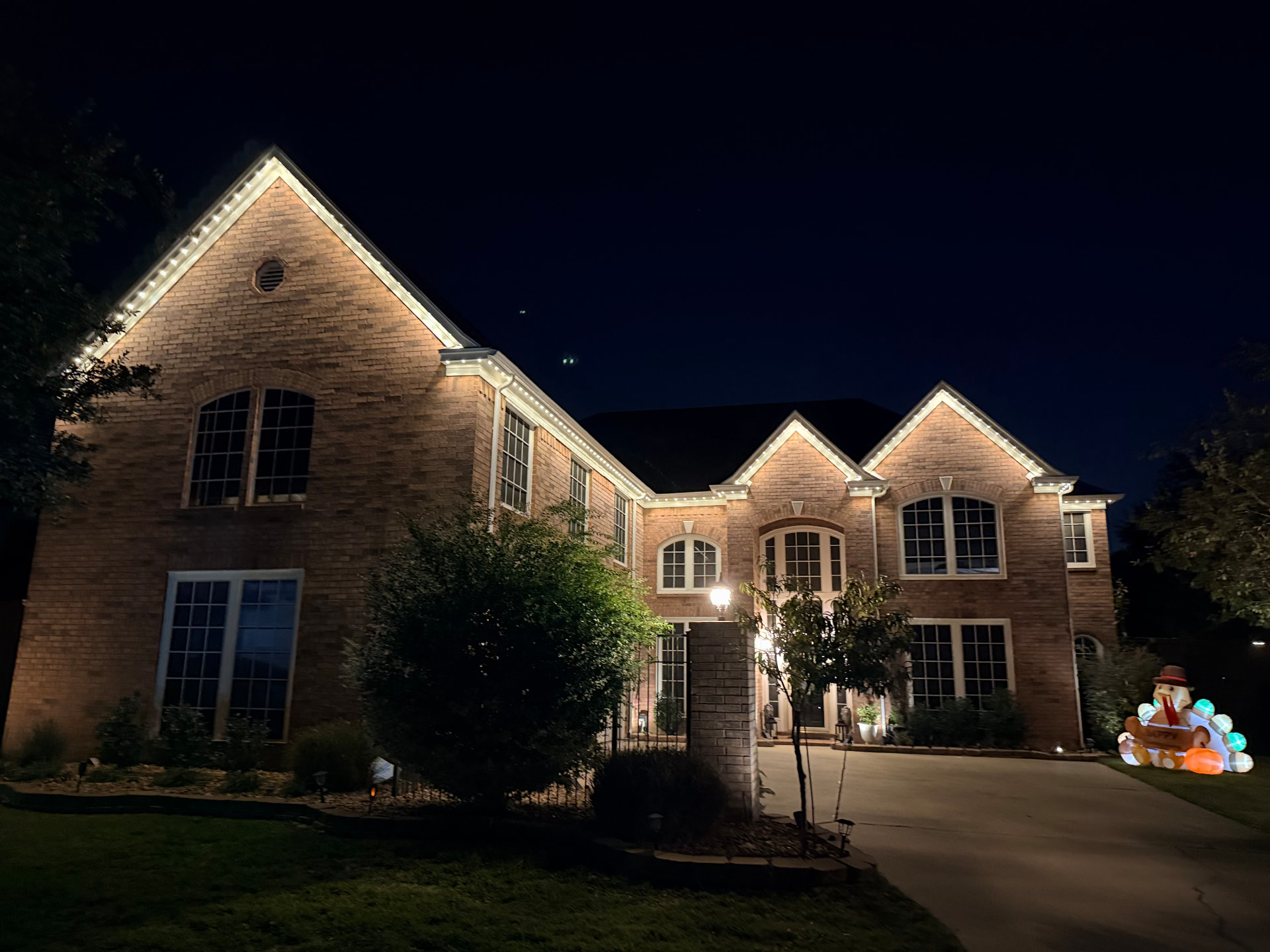
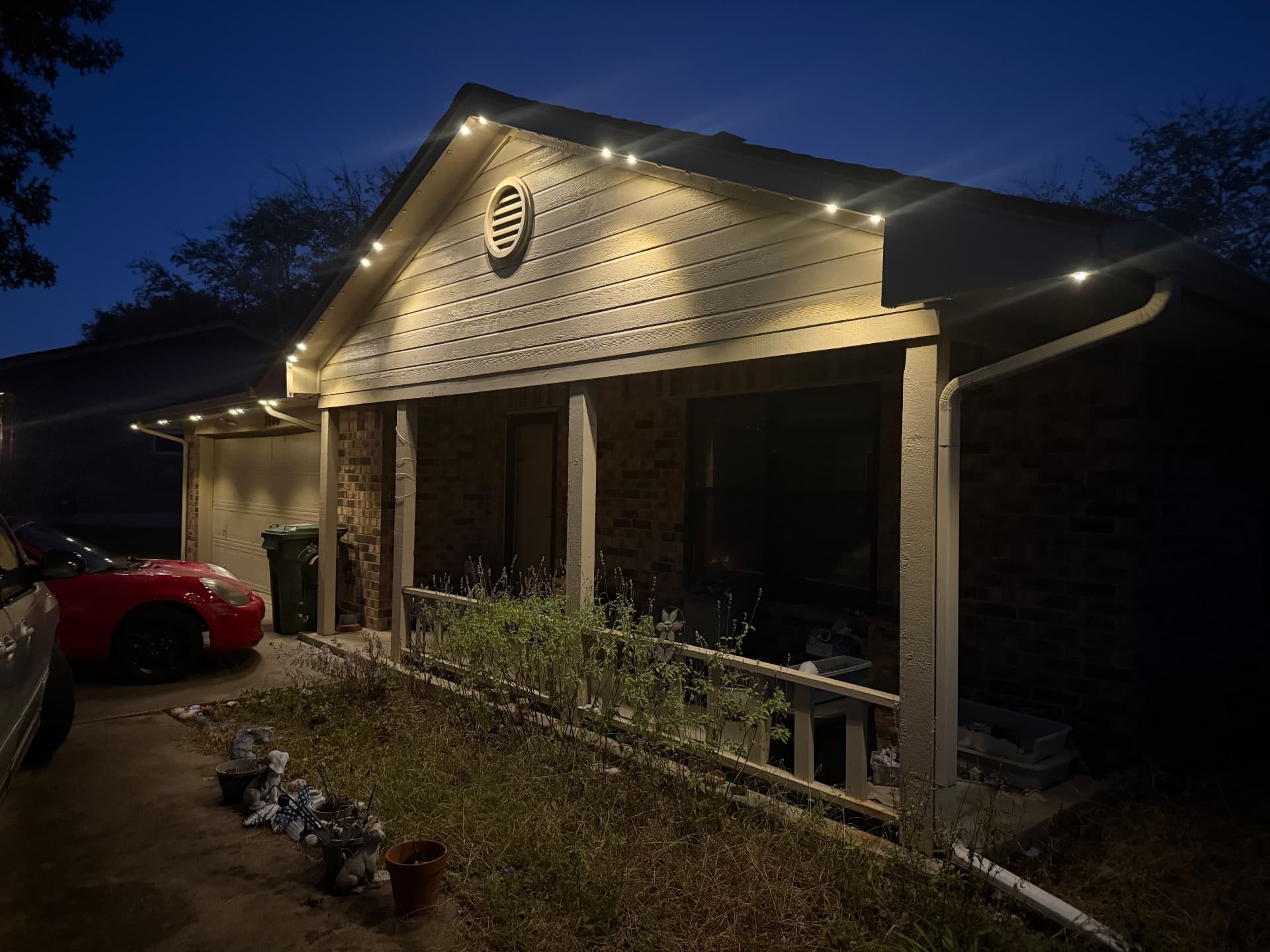
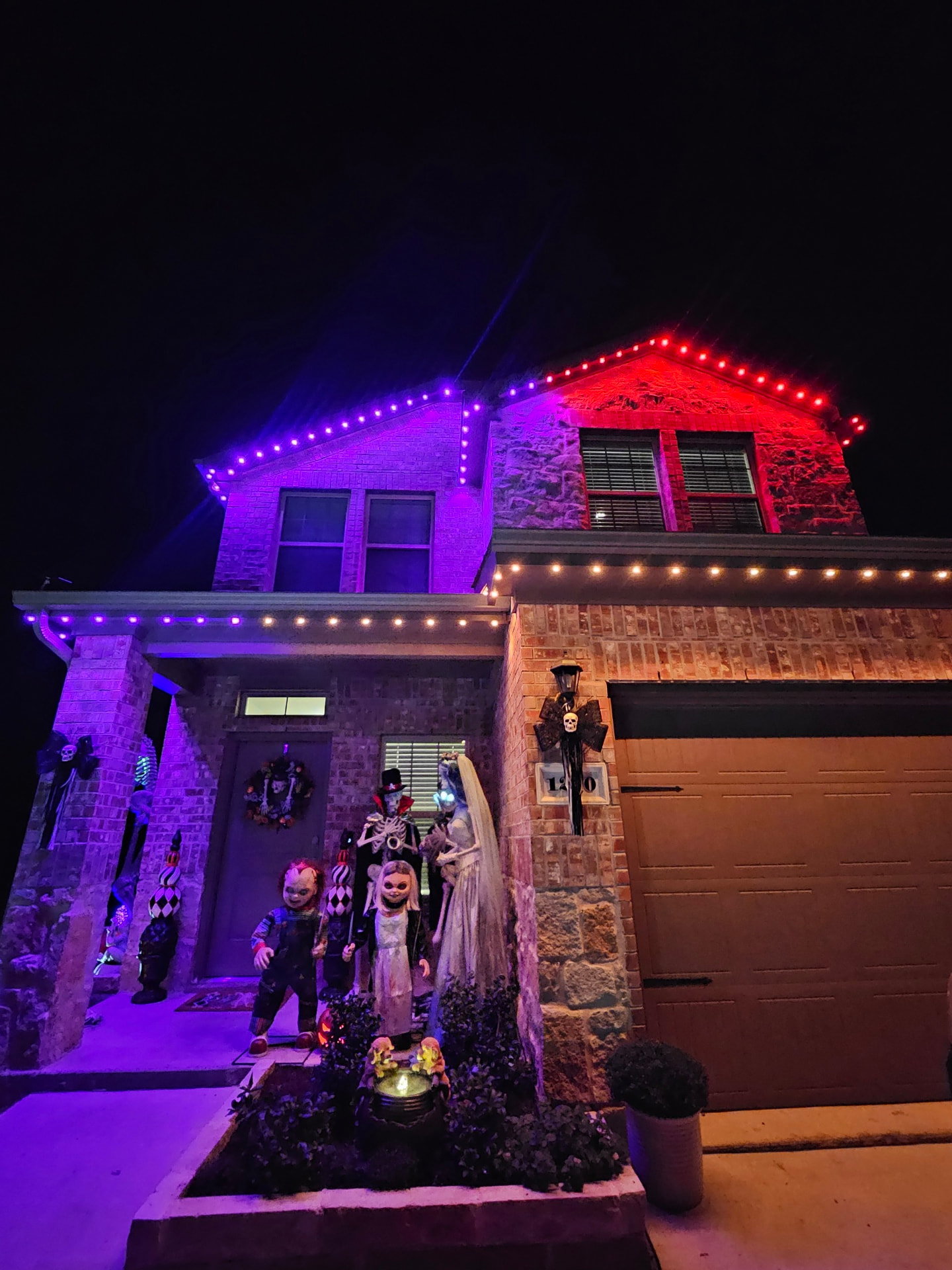
RGBW adds a dedicated fourth chip: a warm-white 2700K LED that produces true incandescent-quality white without mixing. The year-round warm-white setting actually looks like architectural accent lighting — the kind of soft amber glow you'd see on a designer-built estate, not a leftover string of Christmas lights. On color scenes, the W chip also gets used as a 'depth' channel that makes reds richer, greens more natural, and pastel scenes (Easter, Mardi Gras, Pride) more accurate.
Why this matters for the average DFW homeowner: the year-round warm-white setting is the single most-used scene on a permanent lighting system. Most clients run holiday colors ~6 weeks per year and warm-white year-round accent ~46 weeks per year. If the warm white looks pinkish, you're staring at slightly-wrong color 46 weeks out of every 52.
Spec sheet comparison for the systems we install:
Our standard RGBW bulb: 4 channels, 0.7W per channel, dedicated 2700K W chip, CRI 92+, 10-year warranty.
Common RGB bulb (Costco, mid-tier installers): 3 channels, 0.9W per channel, 'white' is RGB-blended, CRI 78, 3-year warranty.
Cost difference at the install level is real but not crazy: an RGBW system runs about 12–18% more than an equivalent RGB system. Spread across a 10-year warranty and a system that gets used ~365 nights per year for accent lighting, the per-night cost difference works out to about 4 cents.
One more nuance: dedicated W chips draw less power for white scenes (only one chip at 100% vs three at 100%), which means lower energy cost over the warranty period and longer effective bulb life. We've measured a ~22% reduction in average wattage draw across a typical install year.
If you're cross-shopping permanent lighting in DFW, ask one question: 'Is your white channel a dedicated 2700K LED, or is it RGB-blended?' That single answer tells you almost everything about how the system will look 46 weeks out of the year.